A scientific seminar on the topic “FTIR Analysis of Molecular and Structural Changes in TiO₂–Fibroin Composites” was held at the Institute of Biophysics
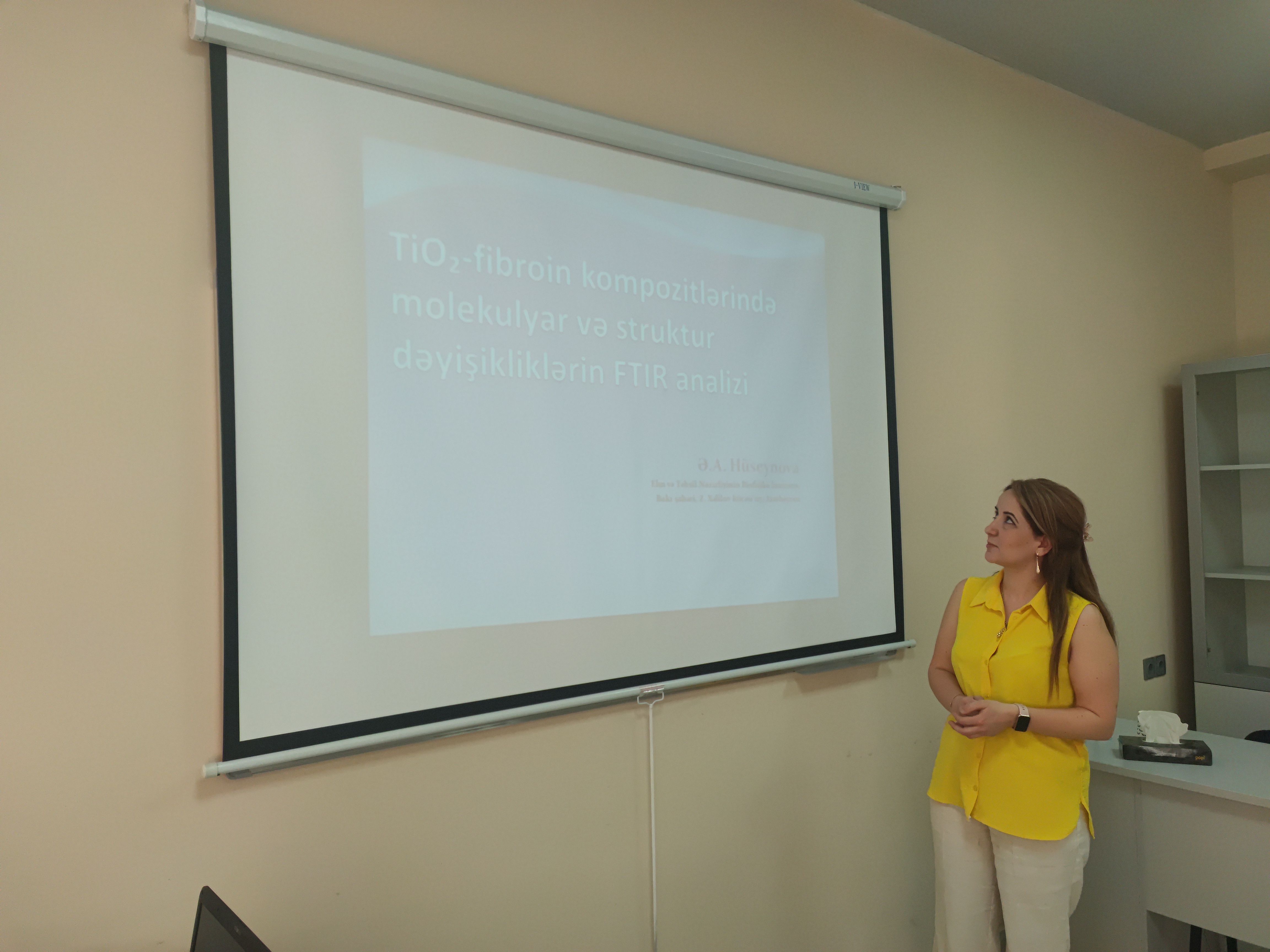
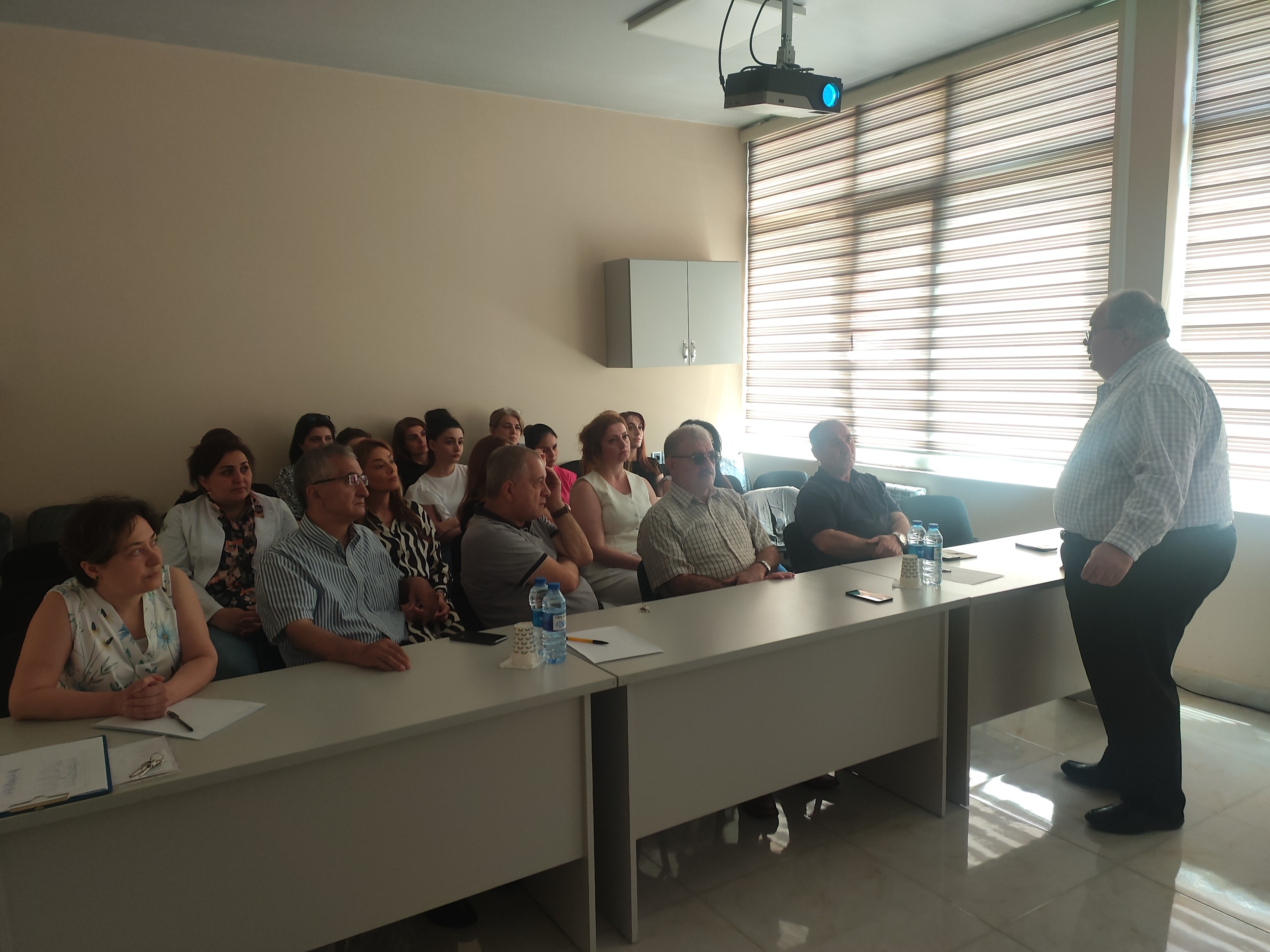
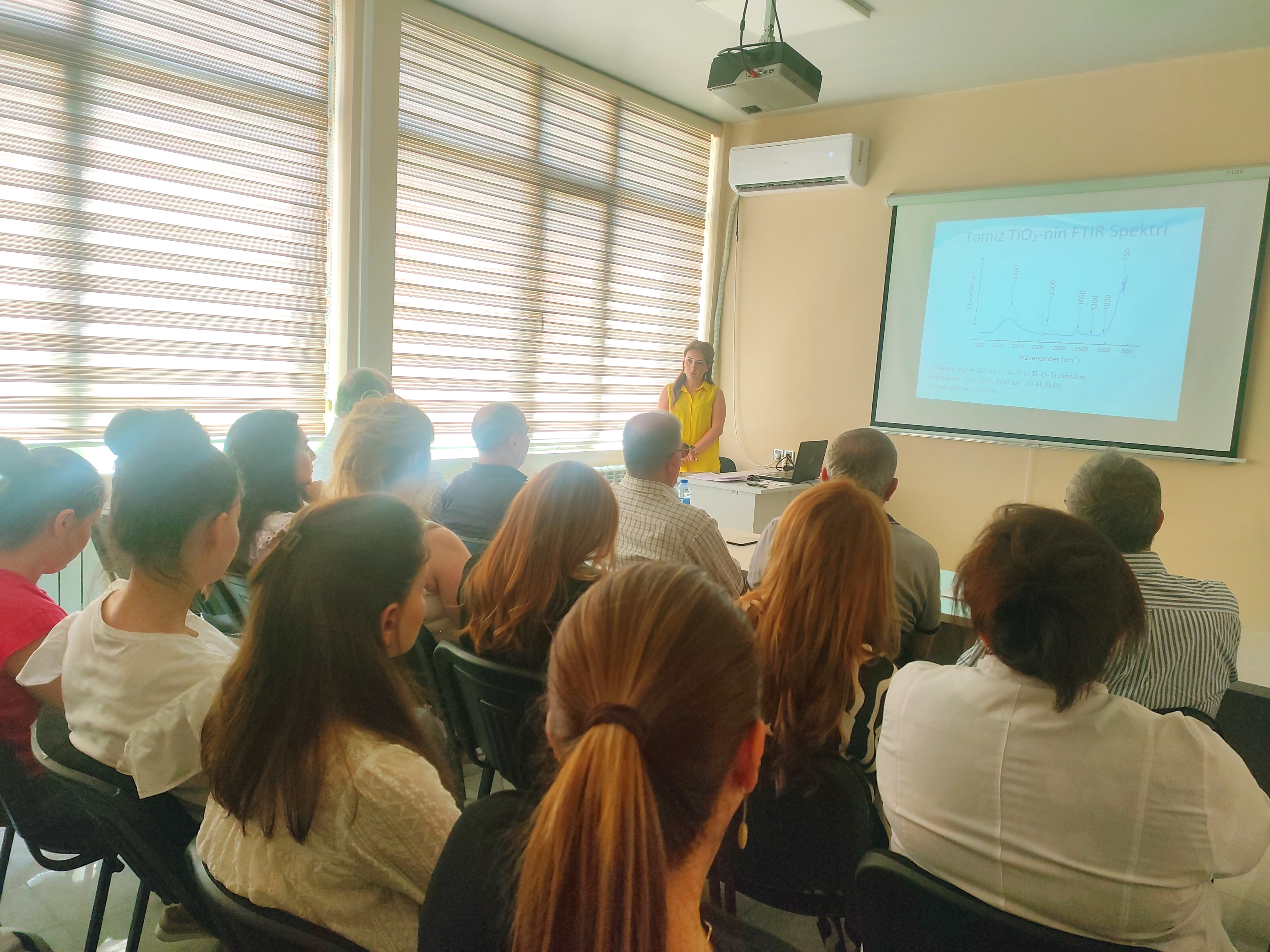
On June 25, 2025, a scientific seminar dedicated to the topic "FTIR Analysis of Molecular and Structural Changes in TiO₂–Fibroin Composites" was held at the Institute of Biophysics under the Ministry of Science and Education of the Republic of Azerbaijan.
The seminar was opened with a welcoming speech by the Director General of the Institute of Biophysics, Corresponding Member of ANAS, Oktay Gasimov, who greeted the participants and emphasized the seminar’s contribution to solving current scientific problems and advancing biomaterials. He also congratulated Aytac Mammadova, an engineer at the "Structure, Dynamics and Function of Biomolecules" laboratory, on her scientific article being ranked in the top 10 in leading global citation databases. He noted that this achievement is a clear indication of the institute's high research potential and international scientific reputation.
Following this, Afsana Huseynova, a research associate of the "Structure, Dynamics and Function of Biomolecules" laboratory, gave a detailed scientific presentation on the topic. She discussed the importance of modifying natural polymers with nanomaterials in modern biomaterials research. The presentation emphasized that while fibroin protein possesses high biocompatibility and biodegradability, its structural modification is essential for enhancing functionality.
In the research presented by Afsana Huseynova, nano-anatase TiO₂ particles were incorporated into the fibroin matrix at varying concentrations, and the resulting structural changes were analyzed using FTIR spectroscopy. The study aimed to assess the impact of TiO₂ addition on the protein’s secondary structure, molecular interactions, and functional properties.
FTIR spectroscopy, deconvolution of the Amide I band, and other analytical methods were used during the study. The spectral changes demonstrated that TiO₂ interacted with fibroin, altering hydrogen bonding, β-sheet structure, and hydrophilicity. At low concentrations, the structure became more amorphous with enhanced functionality, while at high concentrations, particle aggregation was observed.
It was noted that the results obtained open up broad opportunities for the application of TiO₂–fibroin composites in biomedical fields such as tissue engineering, wound dressings, and drug delivery systems.
In conclusion, it was emphasized that Afsana Huseynova worked with high productivity during the research, successfully performing complex and time-intensive analyses with precision. After the presentation, seminar participants asked questions related to the topic, followed by discussions, and all questions were thoroughly answered by Afsana Huseynova.
